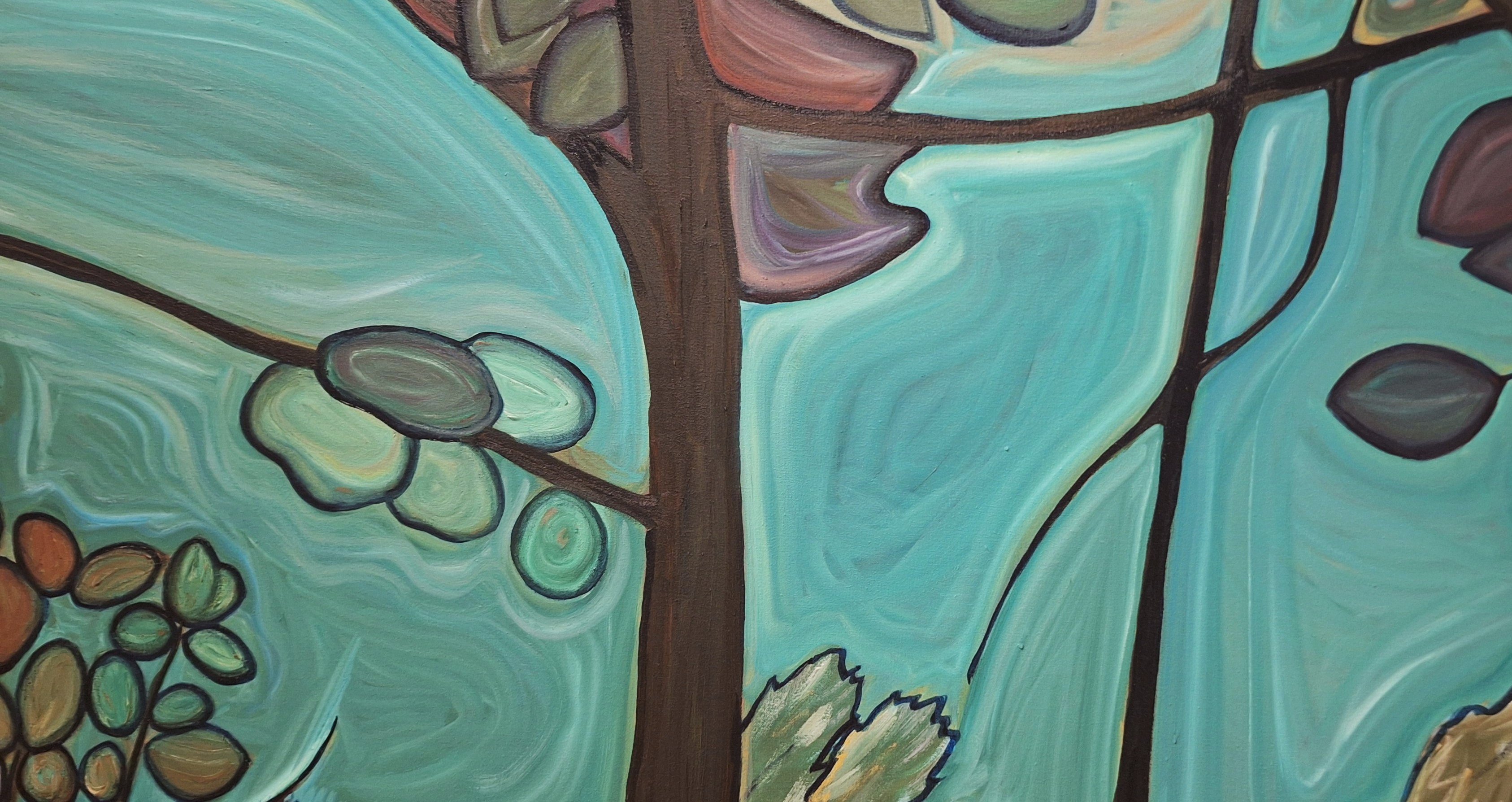
The Art Gallery of Hamilton’s Art Sales + Services is thrilled to present Gathering Edges, a showcase of new paintings and textiles by Canadian artist Kara McIntosh that runs from January 15 to 31.
In this latest series of new works, Kara offers a vivid exploration of the relationship between self and landscape, shaped by presence, memory, and an embodied connection to the Canadian wilderness.
We hope you enjoy this Q&A that explores Kara’s work and process as an artist.
Q. Your hooked pieces often serve as a meditation on creation and observation, informing your painting process. Works like Undulations, Never Alone, Finding Quiet Where We Can, and Sideways embody that cyclical relationship. But your latest textile, Seeing the Bigger Picture, feels like a departure in its more defined landscape composition. When did you make this piece?
A. This is one of the last pieces I finished for the show—only a couple of weeks ago! I’ve been working on it since spring 2025.
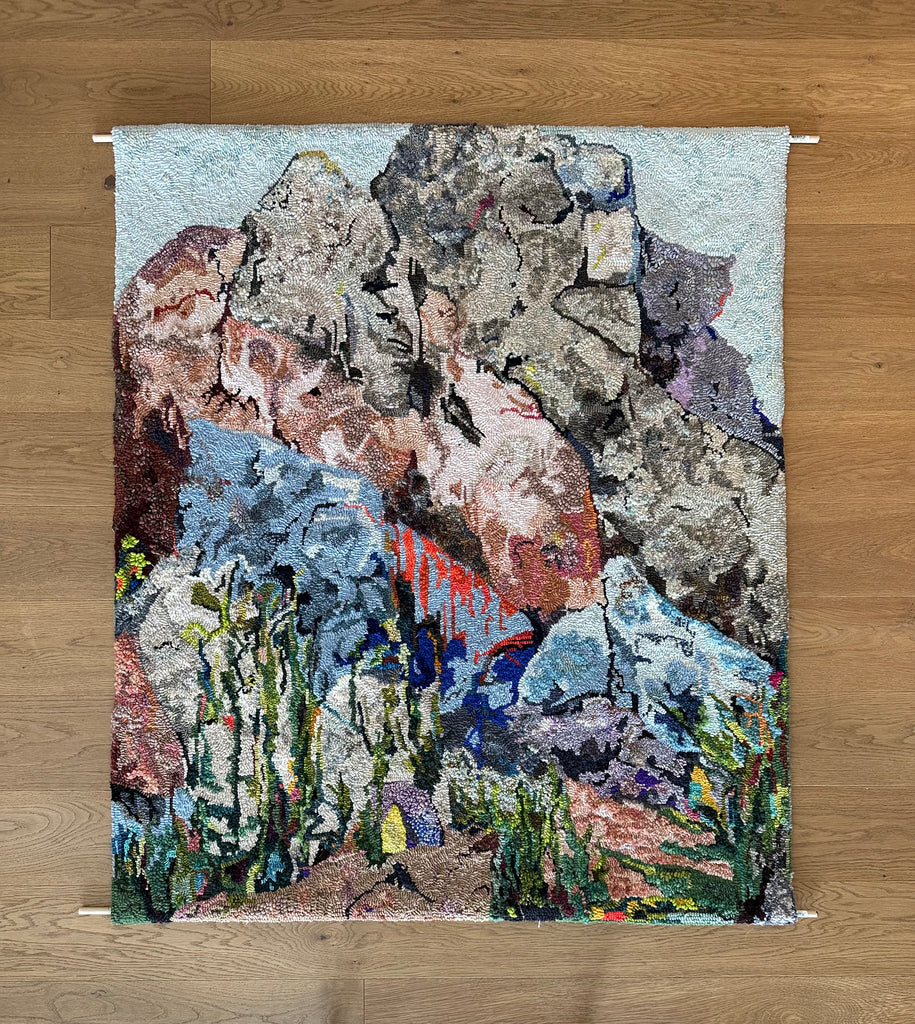
Q. Have you composed figurative imagery in your hooked works before?
A. This piece was experimental and marks the first time I’ve drawn directly onto the linen before hooking. Usually, I just pick a colour and start—making decisions about direction, shape, and line as I go and switching colours or textures whenever I feel pulled to. It’s normally a very intuitive and organic process, and the results tend to be abstract rather than figurative.
For this piece, though, I wanted to try something more landscape‑y. I did a loose drawing on the linen, inspired by one of my paintings, and tried my best to work within that drawing. I wanted to explore how to achieve a painterly feel with textiles.
Q. Were there any key lessons you learned while making this piece?
A. I discovered that I loved working on a very large piece—there’s so much impact. I experimented with combining wools to create different depths of colour and texture, which felt similar to layering paint. I did notice that I would “wander off” sometimes, ignoring the drawing and following my instincts, even shifting the palette away from the original painting in places.
Overall, it was a great exercise in working within the “constraints” of a drawing and seeing how textiles could be used to achieve something different.
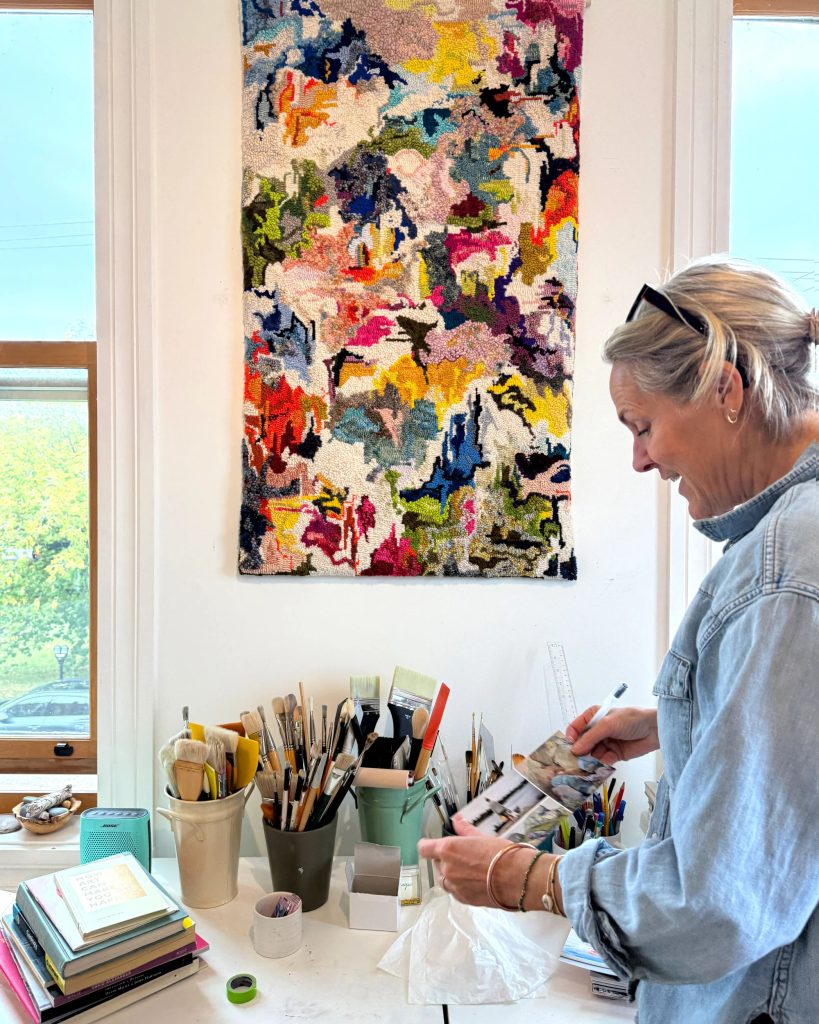
Q. How did your painting practice inform this work, and vice versa?
A. It was new for me to hook something that looked like a painting, so there was a lot of experimenting with materials—combining multiple strands to create blended colours, extra depth, or shading. The natural texture of wool and silk lends itself beautifully to creating a textured surface, and I can pull loops to different heights to add dimension. It mimics oil paint in some ways: thin or thick applications, layering, building texture.
The challenge was working with dyed wool and silk that I couldn’t blend on a palette or directly on the substrate. It’s a different kind of layering—using one colour, then a deeper or lighter shade, or even a different colour altogether, to create the blend. It’s definitely a work in progress!
Q. You recently committed to working in watercolor during a plein-air trip to the East Coast. How did that go?
A. It was really fun, but also frustrating at times! Watercolour is so much easier to transport, so I left my oils at home. I brought inks and pastels too. Working within constraints can be interesting—it forces you to be more creative, exploratory, and experimental because you’re out of your comfort zone.
What I love about watercolour is that you can’t be attached to the outcome, especially when working wet‑on‑wet, which I mostly was. It has a mind of its own—it flows where it wants. The process becomes about making marks and responding to them. You can’t force anything. A piece evolves in ways you didn’t expect, and it becomes a process of discovery. Sometimes the work is fantastic, and sometimes it’s not.
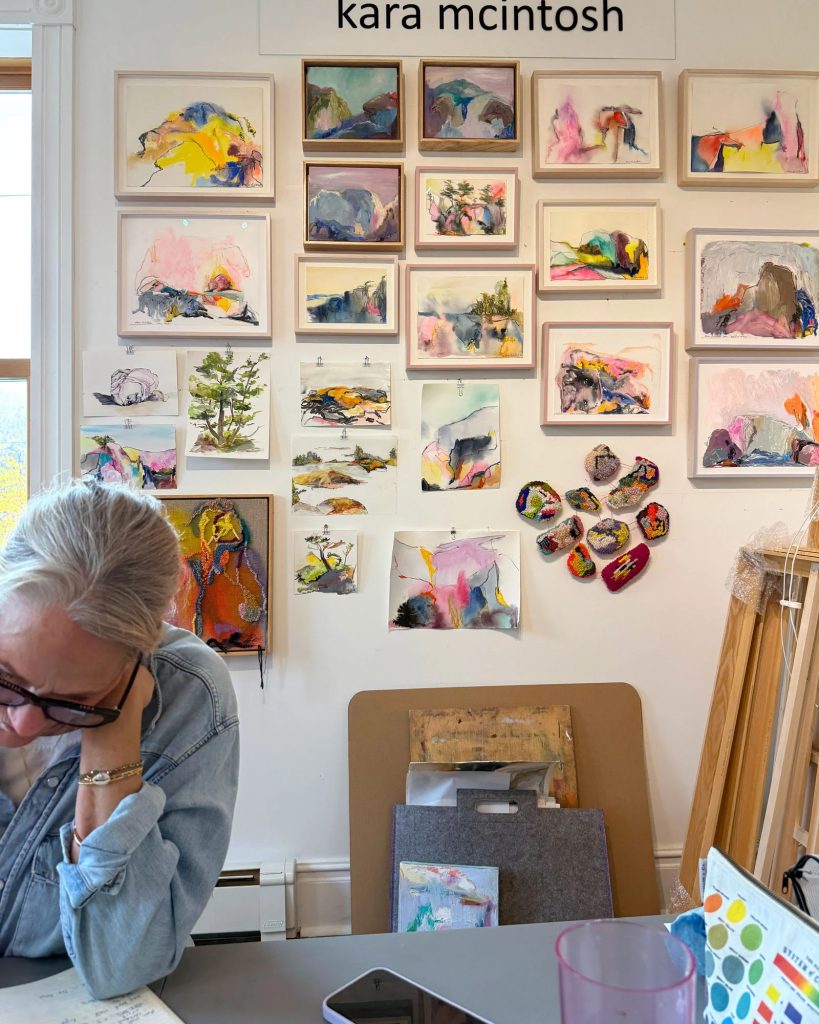
Q. Your recent forestscapes collapse depth so that foreground and background exist on the same plane in a playful way. Are you working from photos or memory, and what are you thinking about when you collapse that field?
A. I spend a lot of time in the forest—many hours exploring, hiking, cross‑country skiing, and snowshoeing—so I’m working mostly from memory with these forestscapes.
Collapsing the depth of field reflects how I experience the forest. I’m thinking about presence and being encompassed by it, not about distance or looking through it. By exploring the intimacy of rhythms, patterns, shapes, surfaces, and colours, the views don’t necessarily recede. The distinction between foreground and background becomes less important—or even irrelevant.
Q. Landscape, climate change, and different environments hold deeply personal meaning for many people. Would you be open to sharing your own connection to landscape?
A. Ohhhh, this is a hard one to sum up! My creative affiliation to the landscape is relational rather than descriptive. By painting somewhere between landscape and abstraction, I give myself a way to experience presence and perception, and to be curious about the relationship between self and place.
Rock formations and forests, in particular, offer quiet structures that are enduring and resilient—they embody an intelligence beyond our human experience. Painting landscape slows my looking and feeling. It encourages a deep exploration of physical and emotional presence—the landscape’s, and my own.
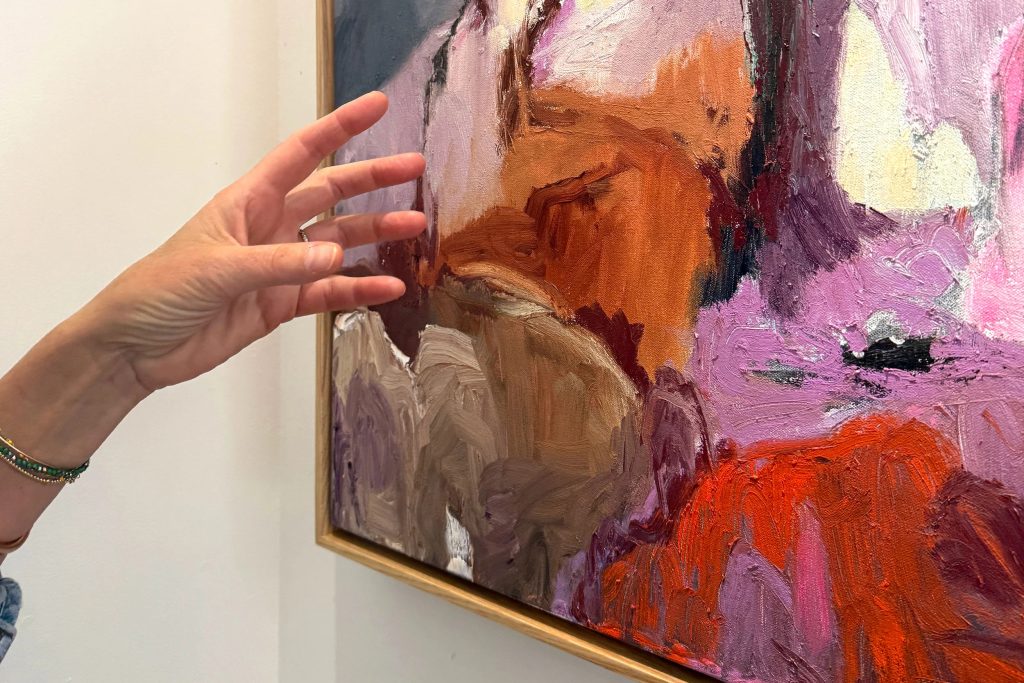
The AGH invites the public to attend the opening reception for Gathering Edges, which will be held at the AGH Art Sales + Services showroom on Thursday, January 15 from 5 to 8 pm. Kara McIntosh will be present, and she is looking forward to meeting everyone and discussing her work.
Gathering Edges is on view from January 15 to 31, 2026.