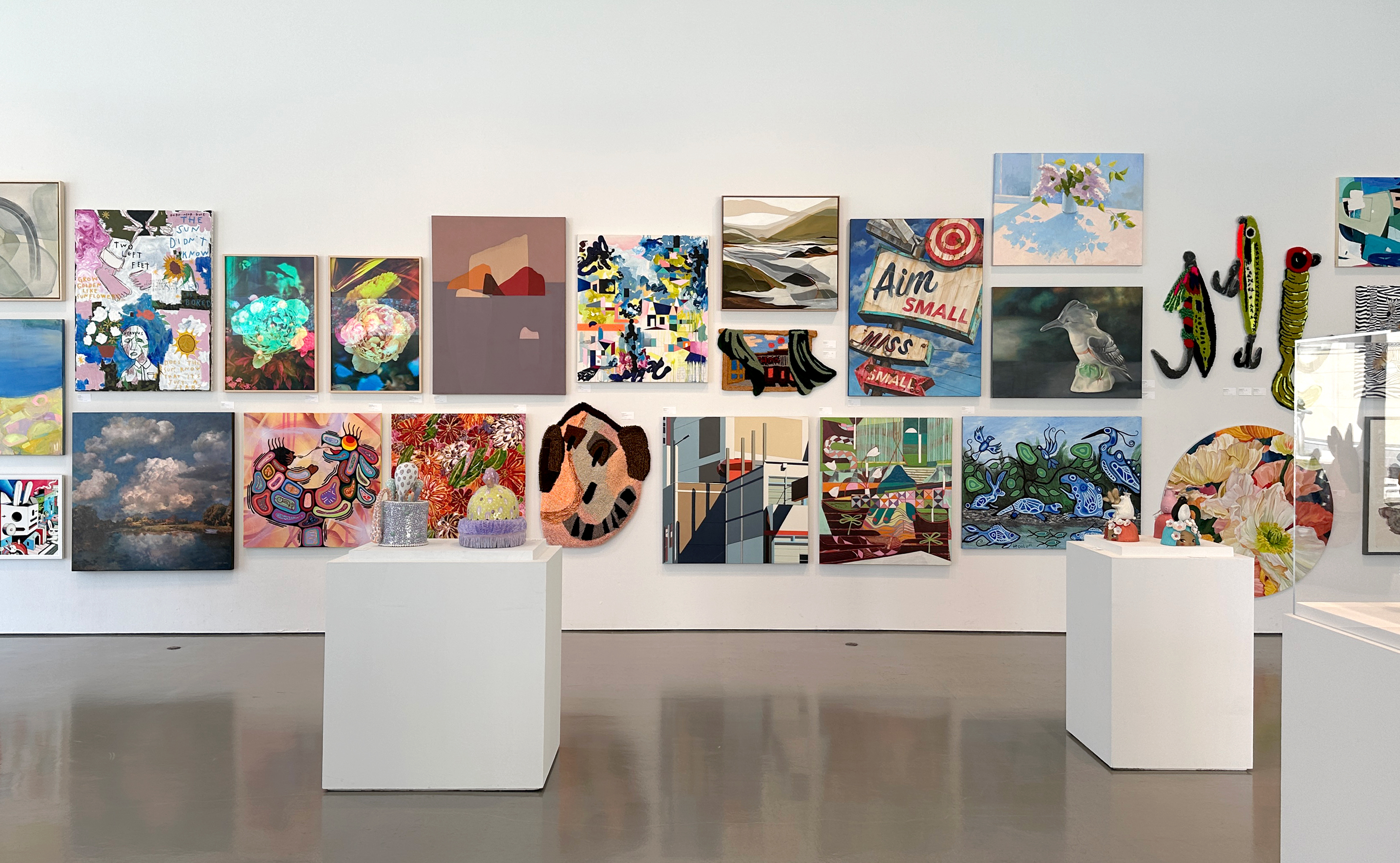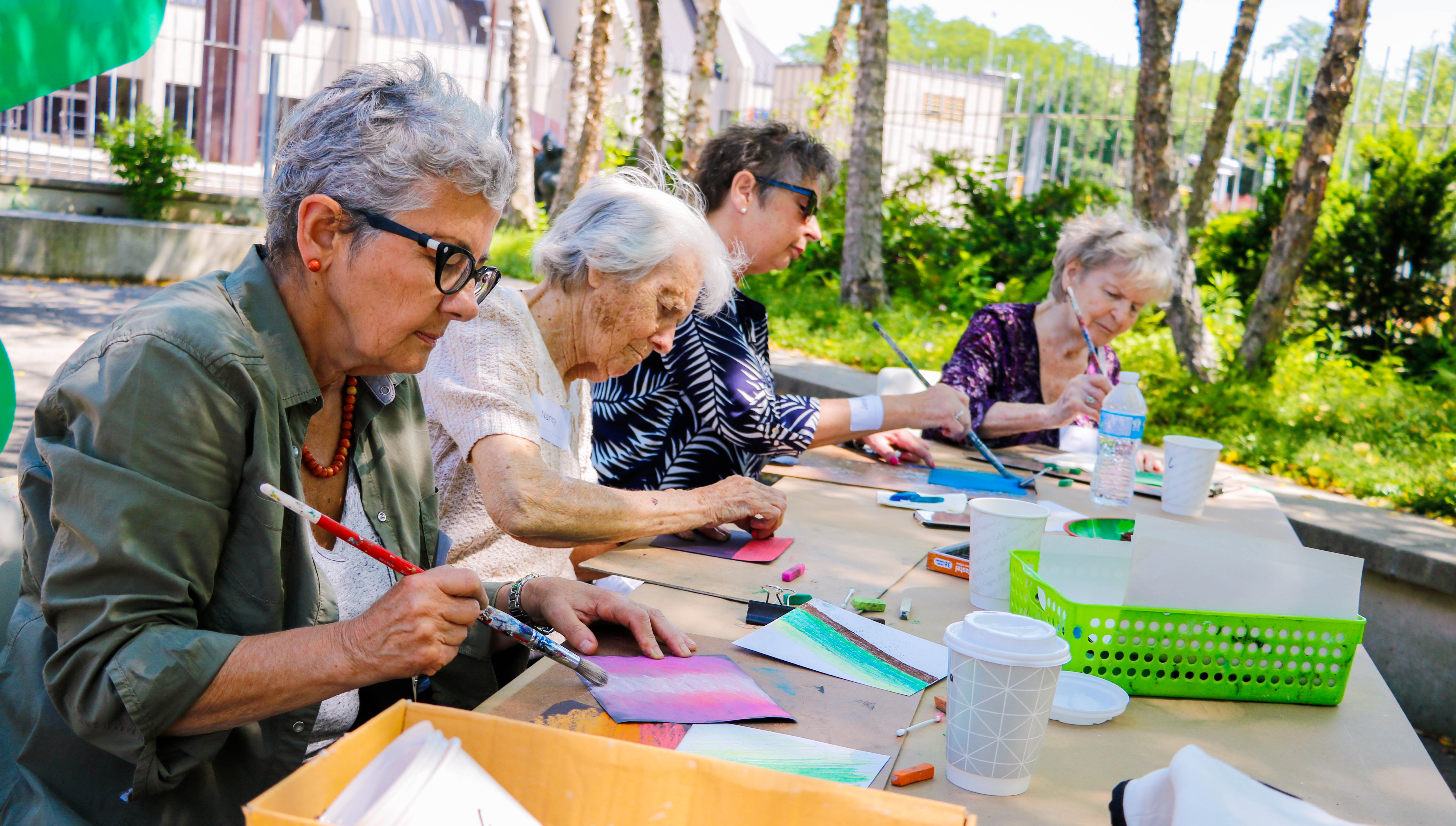
Spectacular paintings and stunning sculptures await your discovery. Remarkable works of art from Canada and around the globe stand ready to dazzle your senses. There’s always so much to experience at the Art Gallery of Hamilton.
Since the AGH was founded in 1914, its permanent collection has grown to include more than 11,200 pieces. The Gallery is proud to be the home of works by renowned First Nations, Inuit, and Canadian artists like Alex Colville, Emily Carr, John Scott, Annie Pootoogook, Tom Thomson, the Group of Seven, Rosalie Favell ,Norval Morrisseau, Suzy Lake, Edward Burtynsky, Jan Wade, Tim Whiten, Jack Bush, Shelley Niro, Carl Beam, Joyce Wieland, and Kim Adams, among many others.
The permanent collection continued to grow over the years thanks to the generosity of community members like Joey and Toby Tanenbaum, who gifted the Gallery with remarkable pieces of 19th-century European, African, and Oceanic art. The Chedoke Collection of Inuit Art, which includes over 100 sculptures produced by Inuit artists at the Hamilton Mountain Sanatorium during the tuberculosis epidemic, was made possible thanks to the donation of these important pieces in 2016.
Generous gifts like these have benefitted the AGH and the community by enriching an already extraordinary collection.
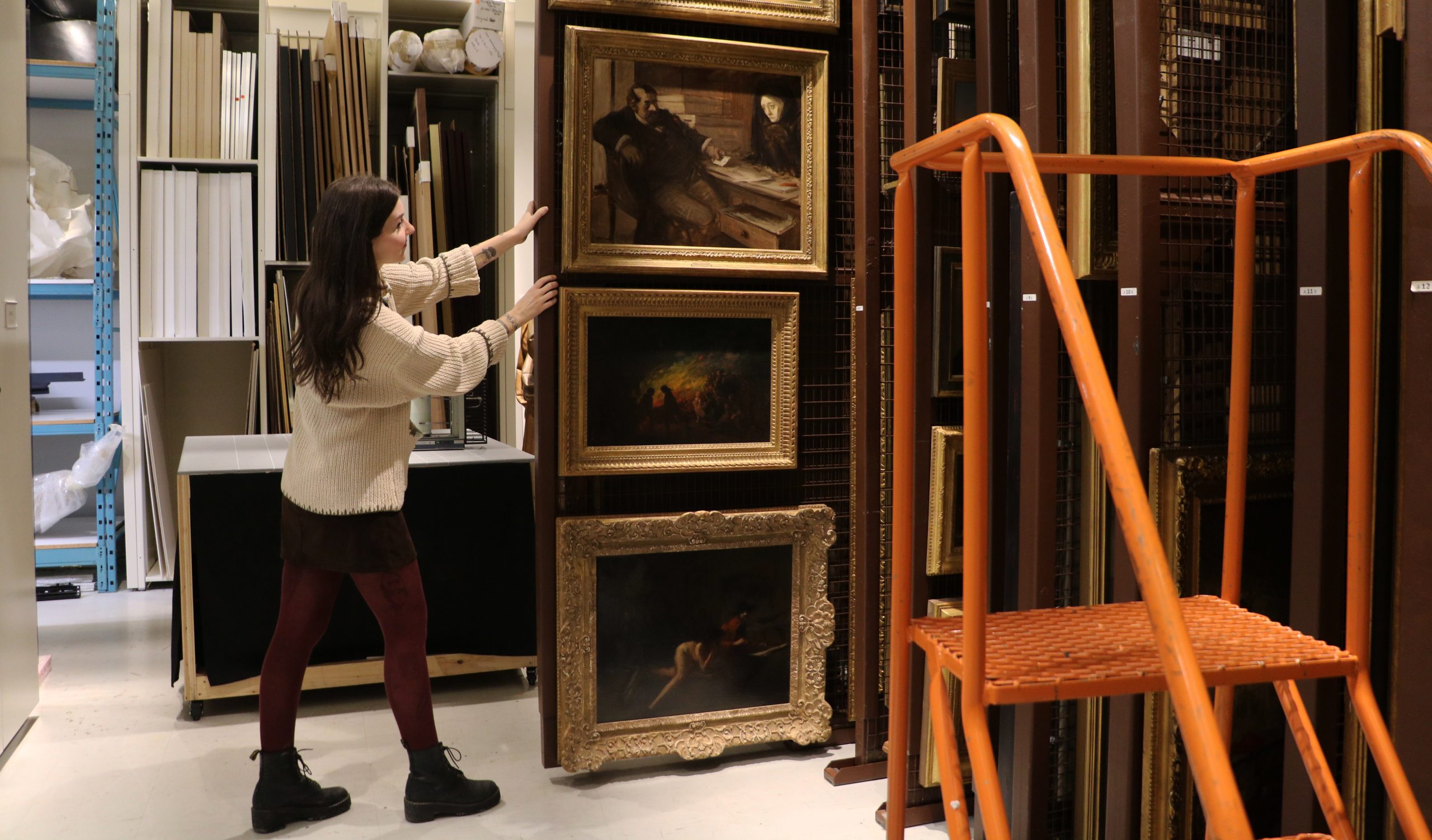
At any given time, only a small portion of the permanent collection is on exhibition for the public to enjoy. However, even the pieces in our vaults require specialized care and attention.
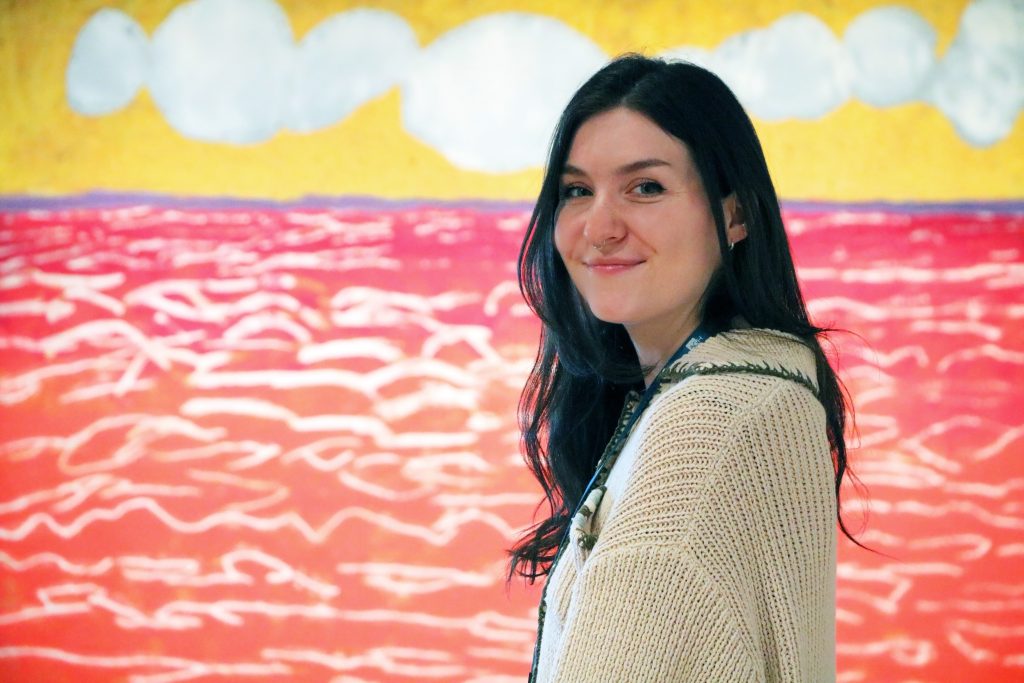
To preserve, catalogue, and track such an extensive collection requires a great deal of work behind the scenes. Today, we introduce the AGH’s Collections Registrar, Andrea Howard, who sat down with us to explain her role in caring for the Gallery’s permanent collection.
Andrea, could you please describe your responsibilities at the AGH?
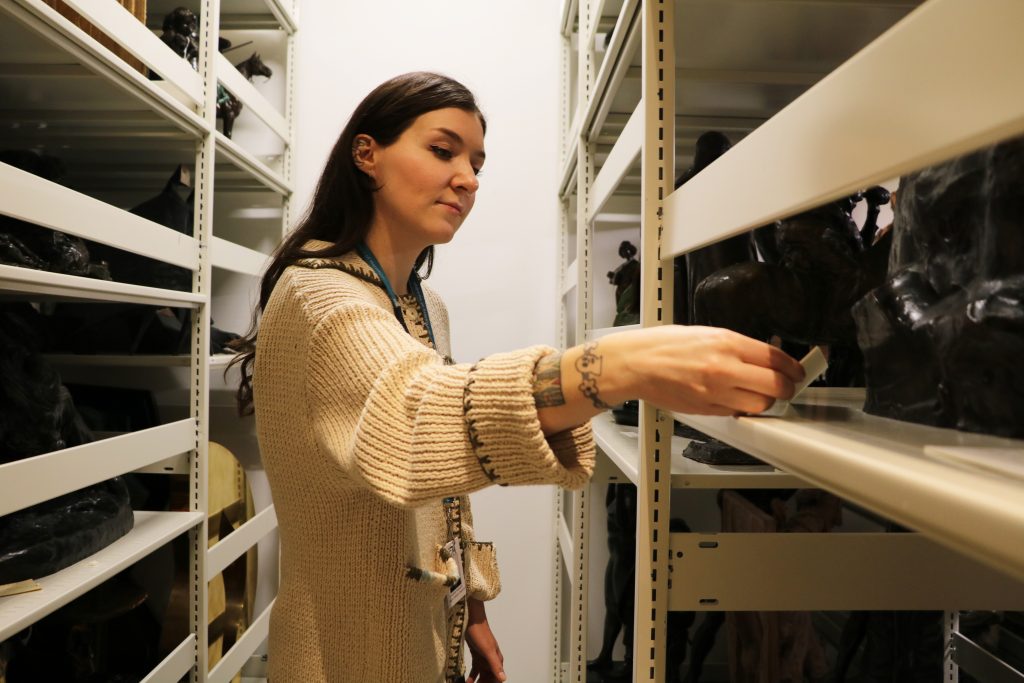
As a caretaker of the Gallery’s permanent collection, I monitor the condition of works and their storage, assist with new acquisitions, capture research and data, coordinate loans of our works to other institutions, and digitize. And of course, I make myself helpful to my team when needed!
How does a typical day look like for you?
No two days in this role look the same, and that’s part of the excitement. Some days, I examine art and take photos in our vaults or on the gallery floor. Other days, I catalogue objects or pull resources for research requests. Every day, I’m learning new ideas, reading up on best practices, asking questions, and remaining curious.
What is your favourite part of your role, and what drives your passion for art?
It’s a great privilege to work so closely with the art and material history of the Gallery. I’m driven to steward the safekeeping and access of stories the artists and artworks tell within our collection.
How did your education and prior work experience lead to this role at the AGH?
My undergrad degree was in Art History, which provided a nice basis for how to interpret and think critically about art. My master’s degree was in Information at the University of Toronto, where I learned about records and data as constructs of authority and social memory.
I was most inspired by how archives and similar repositories are traditionally designed to support a specific type of history, providing access for a specific type of researcher. I knew I wanted to be a part of democratizing access to information and supporting plural histories. Having had a few roles with heritage sites, archives, and a student-run gallery under my belt, I took on this role at the AGH. And here I am!
Can you tell us about your role in digitizing the collection, and why that’s important?
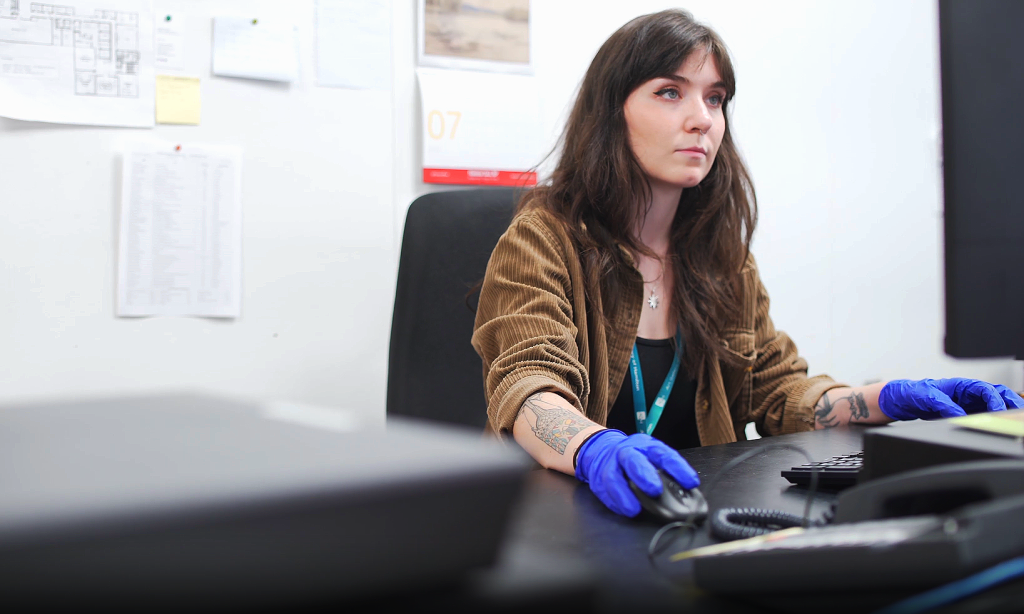
My role is to determine what gets digitized, when it gets digitized, and what tools are used. We prioritize digitization by virtue of access need, preservation need, and research need. As well, because we want to minimize handling, works are digitized when they logistically require it.
Digitization allows us to reach beyond the walls of the Gallery to connect with a global audience of artists, researchers, educators, and arts patrons. It can inspire new art creation, writing, programming, and curation. It can facilitate joy and belonging. The possibilities are limitless.
A really exciting development has been the implementation of an internal digital asset-management system, which serves as a one-stop shop for all images to the collection
In your opinion, why is the AGH such a special place?
It goes without saying that our collection is special, from a regional context and beyond. So many of my favourite artists that I studied in school are represented in our collection, and I’m very often starstruck.
I’m but a small part of a network of highly intelligent, dedicated professionals and volunteers here at the AGH, and I’m always grateful for the endlessly generous collaboration of my peers.
If you could tell the public something about the AGH or your role that isn’t commonly known, what would you tell them?
Most people may not realize how complex digitization can be in the context of a gallery collection. I can think of more than one occasion when a work that needed photography was so heavy that it required a team of people to handle it, or when an oversized work with glazing required numerous tools and attempts at capture, simply to prevent glare. I wish I had endless time and resources to digitize the entire collection at this very moment. But as a team, we make progress every day, and I’m excited for all the challenges that lie ahead.
Art credit: Paterson Ewen (Canadian 1925-2002), Red Sea (detail), 1989, acrylic and metal on gouged plywood. Purchased with funds from the Alfred Wavell Peene and Susan Nottle Peene Memorial, the Walter and Duncan Gordon Charitable Foundation, and the Volunteer Committee, 1990. © Estate of Paterson Ewen.